Strategies, mindset shifts, and tools for those who want to leave the past behind.
Discover systems to help you grow, habits to fuel inspiration, and ways to become empowered that bring back the spark that you once had.

Discover systems to help you grow, habits to fuel inspiration, and ways to become empowered that bring back the spark that you once had.
Everyone’s journey is different, but the challenges are surprisingly similar. Self-doubt, unfinished projects, and the struggle to make things sustainable. The Power2Live™ Trauma-Informed Coaching Program is all about you. The program provides you with the mindset and systems to navigate those hurdles and find your way home.

Fuel your inspiration
Discover rituals and practices that keep purpose alive day after day.

Overcome the messy middle
Tools for navigating self-doubt, low self-esteem, and growth beyond the trauma.

Grow on your own terms
Build resilience, community, and self-confidence by finding your voice and speaking your truth.
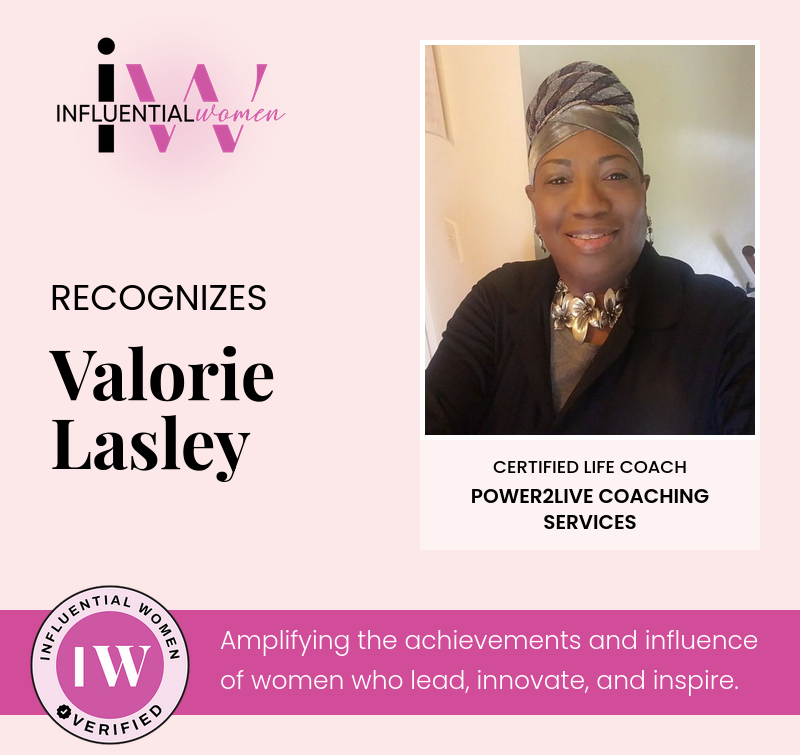
My name is Valorie H. Lasley, and my life’s journey is a testimony that freedom is not just a hope—it’s a decision. I lived for years believing I was forgotten, that my pain had the final word. At eight years old, I experienced a trauma no child should face, and that wound opened a door to cycles of abuse that followed me well into adulthood. For sixteen years, I survived in silence within an abusive marriage that tried to erase my identity, worth, and voice.
But something shifted.
One day, I realized that if I was going to fight for anything—it would be *me*. My freedom, my healing, my peace. That awakening wasn’t just about breaking free from abuse; it was about rising into a life of *deliberate wholeness*. That’s what the Power2Live™ Trauma-Informed Coaching Program is all about.
This program is the result of my fight to reclaim my life. It’s rooted in my belief that your past doesn’t have to define your future—it can *refine* it. Through spiritual growth, personal development, and practical tools, I’ve created a space for women like us to rise—bravely, boldly, and beautifully.
Here’s how the program has helped others stay inspired, finish what they started, and grow into wholeness.
★★★★★
Coach Valorie shows up every time as her authentic self. She leads with integrity and strength. Her listening skills are spot on.
Ravone
★★★★★
I didn’t realize what was holding me back. Once I understood that forgiveness is a major component of healing, I began to feel renewed.
Shirley
★★★★★
Coach Valorie is not afraid to speak her truth. Meeting her felt good and genuine. She listens with her heart and that made it easier for me to share below the surface.
D’lana
Healing the Invisible Wounds: A Reflection on Childhood Trauma and Its Echoes in Adulthood
Good evening.
Today, I want to speak to the hearts that carry silent stories—the ones shaped by childhood trauma. These experiences, often buried beneath layers of survival, don’t simply vanish with age. They echo. They shape how we love, how we trust, how we see ourselves.
Childhood trauma isn’t just about what happened. It’s about what was lost: safety, innocence, connection. And as we grow, we may find ourselves navigating adulthood with tools forged in chaos—hypervigilance, self-doubt, emotional withdrawal. These aren’t flaws. They’re adaptations. Proof that we did what we had to do to survive.
But survival isn’t the same as healing.
Healing asks us to revisit the places we’ve avoided. To name the pain. To understand that our triggers aren’t signs of weakness—they’re signals from a younger self still waiting to be heard. It’s in this listening that transformation begins.
We may struggle with intimacy, with boundaries, with self-worth. But these struggles don’t define us. What defines us is our courage to confront them. To rewrite the narrative. To say: “I am more than what happened to me.”
And for those who feel left behind—who carry grief for the childhood they never got to live—I want you to know: you are not alone. There is no expiration date on healing. No shame in seeking help. No weakness in vulnerability.
Let us be gentle with ourselves. Let us honor the resilience it took to get here. And let us believe, even if just a little, that healing is possible—not because the past changes, but because we do.
Thank you.
Contact Information
power2livecoachingservices@outlook.com
Instagram @valorielasley
Facebook- Valorie H Lasley
TikTok- @lasleyv
ADVERSE CHILDHOOD EXPERIENCES
How do you think childhood trauma shapes the way someone sees themselves- and how might that impact their relationships later in life?
 power2livecoaching.com